In today’s architectural and construction environment, reliable data is no longer optional — it is foundational. As renovation, adaptive reuse, and complex retrofits increasingly dominate the market, the need for accurate existing-condition documentation has never been more critical. Engineering-focused teams like ScanM2 are redefining how architects and developers approach pre-construction workflows by replacing assumptions with verified geometry.
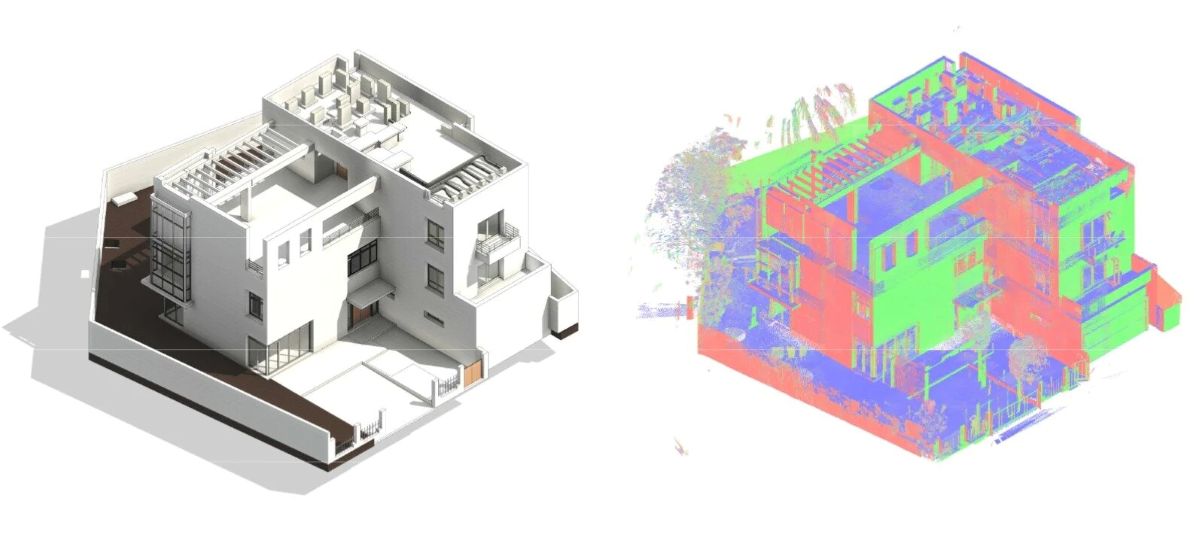
Rather than positioning itself as a conventional surveying provider, ScanM2 operates at the intersection of 3D laser scanning, BIM modeling, and digital reconstruction of built assets. The company focuses on converting physical environments into structured, coordinated digital datasets that directly support design development, interdisciplinary coordination, and risk mitigation.
From Raw Geometry to Structured Intelligence
Many firms offer 3D scanning services. Far fewer understand how to transform raw scan data into coordinated BIM environments that integrate seamlessly into architectural workflows.
ScanM2’s process begins with high-density terrestrial laser scanning, capturing millions of spatial reference points with millimeter-level precision. However, the real value lies not in the point cloud itself, but in how that data is processed, structured, and validated before modeling begins.
Instead of delivering raw datasets, the team prioritizes:
- Clean point cloud registration
- Controlled coordinate systems
- Noise filtering and alignment validation
- Structured modeling in Revit and IFC environments
- LOD-adjusted BIM deliverables (typically 200–500 depending on project scope)
This disciplined workflow significantly reduces ambiguity for architects working on renovation and retrofit projects, where legacy documentation is often outdated, incomplete, or inconsistent.
Addressing the Risk of Inaccurate Existing Conditions
One of the most persistent blind spots in architectural practice is reliance on unreliable as-built drawings. Even small deviations between documentation and reality can result in:
- MEP clashes during installation
- Structural misalignments
- Costly rework and change orders
- Budget overruns
- Schedule delays
ScanM2’s methodology directly addresses this gap by replacing inherited drawings with measured geometry. Through coordinated modeling and tolerance control, design teams gain a reliable digital environment where spatial conflicts can be identified and resolved before construction begins.
This approach becomes particularly critical in industrial retrofits, heritage restoration, high-density urban renovations, and MEP-intensive facilities — environments where spatial accuracy directly influences construction feasibility.
BIM as a Risk-Control Instrument
What distinguishes ScanM2’s approach is the understanding that BIM is not merely a visualization tool. It is a mechanism for controlling technical risk.
By aligning digital models with real-world conditions, the company enables early-stage clash detection, structural validation, spatial coordination of engineering systems, and fabrication-level referencing. In complex projects, the cost of correcting errors during construction far exceeds the investment in precise early documentation. ScanM2’s workflow is built around preventing those downstream risks.
Structured Deliverables for Multidisciplinary Teams
Architects and engineers do not need unfiltered scan data — they need structured, usable documentation aligned with project objectives. Depending on scope, deliverables may include coordinated BIM models, IFC exports, 2D as-built drawings, façade documentation, MEP system modeling, and reverse engineering of structural components.
The emphasis remains on clarity, coordination, and technical integrity rather than data volume.
As the industry shifts toward Digital Twin concepts and data-driven asset management, firms capable of bridging field conditions with structured BIM environments play an increasingly important role. ScanM2 reflects this transition — moving beyond isolated scanning services toward integrated digital reconstruction workflows that strengthen architectural decision-making.