My neighbor Linda called me in a panic last spring. Her 40-year-old silver maple — the one that shades half her front yard — had started pushing its roots right through her lawn. She’d tripped on one of them twice. Her HOA had sent a notice. And she’d already gotten two landscaping quotes that ranged from “reasonable” to “I think they’re charging me for a kidney.”
Here’s the thing: Linda didn’t have a tree problem. She had a landscaping problem. And it’s one of the most common (and most mishandled) situations homeowners across the U.S. face every single year.
If you’re dealing with something similar, this is your honest guide — no filler, just what actually works.
Why Tree Roots Surface in the First Place
Before you start digging, it helps to understand what you’re dealing with. Most tree roots grow in the top 6 to 24 inches of soil — not deep underground like most people assume. As a tree matures, roots thicken and expand laterally, sometimes lifting pavement, cracking walkways, or breaching lawn surfaces entirely.
According to the International Society of Arboriculture, surface roots are particularly common in trees planted in compacted or clay-heavy soils, where roots are forced to seek oxygen closer to the surface. Maples, oaks, willows, and beeches are among the most frequent offenders — but really, any large tree in the wrong soil conditions can develop this issue.
Cutting exposed roots is almost never the right answer. Severing a root over 2 inches in diameter can permanently destabilize a tree — and in some municipalities, a fallen tree that damages property or injures someone can expose the homeowner to serious liability. In short: work with the roots, not against them.
Practical Front Yard Landscaping Ideas Around Tree Roots
1. Build a Raised Mulch Ring (The Right Way)
The single most effective and tree-friendly solution is a properly built mulch ring. Here’s where most people go wrong: they pile mulch directly against the trunk (called “volcano mulching”), which suffocates the bark and invites disease and rot.
The correct method is to extend your mulch ring at least 6 to 8 feet from the trunk — further if your tree is large — and keep mulch 3 to 4 inches deep, but pulled back 3 inches from the base of the trunk itself. Use shredded hardwood or wood chip mulch, not rubber mulch (which heats up and doesn’t improve soil biology).
This approach simultaneously covers surface roots, eliminates the need to mow around them, and actually improves tree health over time.
2. Plant Shade-Tolerant Ground Cover
Ground covers are an underused solution for front yard landscaping ideas around tree roots. The key is picking plants that can handle both deep shade and root competition — most plants can’t do both. Those that can include:
Pachysandra (Pachysandra terminalis) — thrives in zones 4–9, spreads slowly, stays evergreen, and requires minimal maintenance once established. It won’t outcompete the tree’s root system.
Creeping Jenny (Lysimachia nummularia) — a fast-spreading, chartreuse-leafed option that works beautifully in moist, partial-shade conditions in zones 3–9.
Wild Ginger (Asarum canadense) — a native option that deer tend to leave alone and that handles drought reasonably well once established.
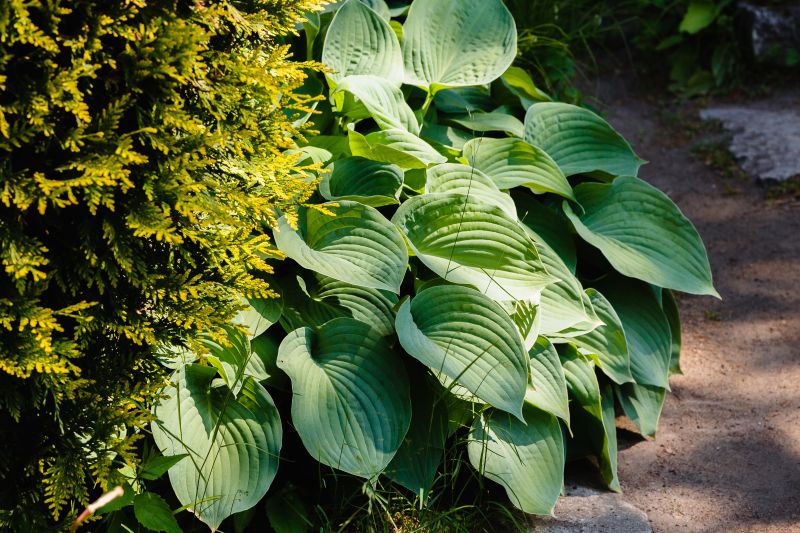
Hostas — not technically a ground cover, but clumping hostas planted between surface roots create a lush, layered look that disguises uneven ground naturally.
3. Install a Dry-Stacked Stone Border
If your surface roots have created genuinely uneven terrain that’s a tripping hazard, a dry-stacked stone edging border can create a defined “tree island” that signals to guests (and HOA inspectors) that the area is intentional landscaping — not neglect.
Use locally-sourced flat fieldstone or Pennsylvania bluestone. Stack the stones no higher than 6 to 8 inches — you don’t want to bury roots under heavy fill soil. The ring should never be mortared; roots need room to shift with seasonal changes.
This approach also has a practical legal upside: if a visitor trips on your property, a clearly defined and edged landscape bed is far easier to defend as a maintained area than a patch of exposed roots in a lawn.
What You Should Absolutely Avoid
Cutting roots without an arborist’s sign-off is the number-one mistake. Beyond tree health, removing large roots can create liability if the tree later falls. Adding more than 2 inches of soil over existing roots is equally harmful — it starves the roots of oxygen and can kill the tree within several years, a process called “slow decline” that often isn’t noticed until the damage is irreversible.
Also avoid planting aggressive spreading plants like English ivy or bamboo around tree roots. Both are invasive in most U.S. states and create their own removal headaches.
Testimonials From Real Homeowners
“We had three silver maples in our front yard and the roots were destroying our lawn. Our landscaper suggested hostas and a mulch bed, and two seasons later, it genuinely looks like it was designed that way. Visitors always compliment it.” — Karen M., Naperville, IL
“I was ready to just have the whole tree removed until a friend told me about dry-stacked stone borders. Saved the tree, fixed the tripping hazard, and our home’s curb appeal went up. Our real estate agent said it was a selling point when we listed last fall.” — David T., Richmond, VA
FAQs About Landscaping Around Tree Roots
Q: Can I put soil or garden beds directly over tree roots? A: You can add a thin layer — no more than 1 to 2 inches of organic compost — without significant harm. Anything deeper than that can suffocate surface roots and may slowly kill the tree over 3 to 7 years.
Q: Is it legal to remove tree roots that are damaging my driveway or sidewalk? A: It depends on your municipality and who owns the tree. If the tree sits on your property, you generally have more latitude — but many arborists and legal experts recommend getting a written assessment before removing any root over 2 inches in diameter. In some cities, trees near the public right-of-way are jointly owned, and unauthorized removal can result in fines.
Q: My neighbor’s tree roots are extending into my yard. What are my options? A: Under most U.S. property law (following the Massachusetts Rule), you have the right to cut encroaching roots at your property line — but only if they’re causing actual harm or nuisance. You’re generally not entitled to cost recovery from your neighbor unless the tree is diseased, dead, or considered a known hazard and your neighbor ignored repeated warnings. Consult a local property attorney before cutting anything.
Q: What ground cover grows best in full shade under a dense tree canopy? A: Pachysandra, wild ginger, and creeping phlox are among the most reliable performers in deep shade. Ferns — particularly ostrich ferns (zones 3–7) or autumn ferns (zones 5–9) — are also excellent choices for naturalizing a tree bed area.
Q: How far should a mulch ring extend? A: The general rule of thumb from the Arbor Day Foundation is to extend the mulch ring as far as the drip line of the tree (the outer edge of the canopy). At minimum, a 6-foot diameter ring is recommended for mature trees.
Final Thought
Linda’s front yard, for what it’s worth, looks incredible now. She chose a combination of hostas, a wide mulch ring, and a simple stone border. No roots removed. No expensive tree surgery. The HOA sent her a compliment letter.
Tree roots aren’t a problem to solve by force — they’re a design challenge with surprisingly elegant solutions. Work with your tree, and your front yard will thank you for it.
Have a landscaping situation that also touches on property rights or neighbor disputes? Drop your questions in the comments below.