The first time I walked into an NTR massage parlour — tucked between a dry cleaner and a smoothie bar in suburban New Jersey — I genuinely had no idea what I was signing up for. My neighbor had been raving about it for months. “It’s not what you think,” she kept saying. She was right. What I found was a meticulously structured wellness session rooted in neuromuscular technique and rhythmic tissue restoration that left me feeling, as my husband later put it, “like a different person.”
If you’ve been curious about what an NTR massage parlour actually offers — beyond the signage and the soft music — this guide is your practical deep-dive. We’ll cover the techniques, what to expect, how to bring elements of it home, and what real clients across the U.S. are saying.
What Does NTR Mean in a Massage Context?
NTR stands for Neuromuscular Tissue Release — a clinical-adjacent bodywork approach that targets the connection between nerve pathways and muscle tissue. Unlike a standard Swedish massage that focuses on surface-level relaxation, NTR massage parlour technique digs into specific trigger points and fascial layers where chronic tension lives.
According to the American Massage Therapy Association, approximately 47.5% of Americans who get massages cite chronic pain or muscle stiffness as the primary reason — and NTR-style work directly addresses that root cause rather than just the symptom.
A licensed massage therapist in Phoenix, Arizona, who has practiced NTR technique for nine years, described it this way: “Think of it as having a conversation with your nervous system rather than just pushing on your muscles. We’re asking the tissue to let go, not forcing it.”
The Core Techniques Used Inside an NTR Massage Parlour
Most NTR massage parlour sessions run between 60 and 90 minutes and incorporate a combination of the following:
1. Ischemic Compression The therapist applies sustained pressure to a hyperirritable spot in the muscle — known as a trigger point — until the tissue releases. This typically takes 8 to 12 seconds of held pressure. You’ll often feel a referred ache that gradually melts. It’s uncomfortable for about four seconds, then almost euphoric.
2. Rhythmic Effleurage Sequencing This is the “warm-up” phase. Long, rhythmic strokes follow the direction of lymphatic drainage — typically moving toward the heart. Good NTR massage parlour practitioners spend a full 10 to 15 minutes here before any deeper work begins. Rushing this step is one of the biggest technical errors in lower-quality parlours.
3. Reciprocal Inhibition Stretching Rather than passive stretching, this technique asks you to actively contract the opposing muscle group. For example, if a therapist is working on your hamstrings, you’ll gently flex your quads. This neurological signal encourages the hamstring to release more completely than manual pressure alone.
4. Cross-Fiber Friction Applied perpendicular to the muscle fibers rather than along them, cross-fiber friction is particularly effective for old scar tissue and chronic tendon issues. This is common in NTR massage parlour sessions for clients who work physical jobs or have sports-related injuries.
“I’ve had regular massages for years and never felt results that lasted more than two days. After my first NTR massage parlour session in Austin, the tension in my left shoulder — which I’d had for three years — was noticeably reduced within 48 hours. By week three of monthly sessions, it was gone.” — Marcus T., software engineer, Austin, TX
What to Expect at Your First NTR Massage Parlour Visit
Walk in expecting a clinical intake process. A legitimate NTR massage parlour will ask you to complete a health history form that covers everything from your sleep quality to any prescription medications you take. This isn’t bureaucracy — it directly shapes the session.
The room itself should be quiet, temperature-controlled (ideally between 72–76°F), and free of strong synthetic fragrances. A well-run parlour uses either unscented linens or hypoallergenic essential oil diffusers — not plug-in air fresheners that can overwhelm a person’s nervous system before the session even begins.
Drink at least 16 oz of water before arriving. NTR technique mobilizes metabolic waste products stored in muscle tissue — your lymphatic system needs hydration to process and clear them efficiently after the session.
Expect to feel mildly sore 24 to 36 hours after your first visit, similar to the feeling after a new workout. This is normal, and most clients report it disappearing entirely by the third session.
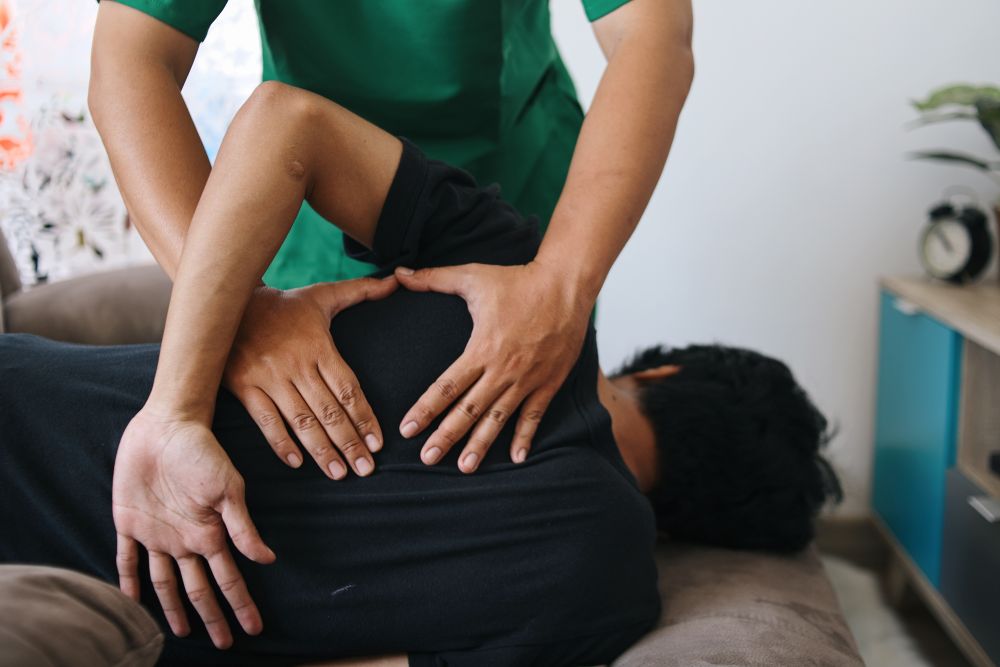
Bringing NTR Massage Parlour Techniques Into Your Home Routine
Here’s the thing about NTR: it’s one of the few massage disciplines where specific foundational techniques can be practiced at home between professional sessions — and doing so can double the results.
Self-application tools to look for:
- Lacrosse balls or massage balls for ischemic compression on the glutes, upper traps, and feet
- Foam rollers with ridged texture for cross-fiber fascial work on the IT band and thoracic spine
- Theracane or S-shaped massage hook for reaching trigger points in the mid-back and posterior shoulder
- Heating pads used for 10 minutes before self-massage to prime the tissue
A practical at-home NTR-inspired routine takes about 15 minutes and is ideally done three times a week. Start with 5 minutes of heat, then spend two minutes on each major trigger point area — upper traps, sub-occipital (base of skull), hip flexors, and calves — holding each point for 10 seconds before releasing.
How to Vet an NTR Massage Parlour Before You Book
Not every business using the term “NTR massage” is offering the same standard of care. In the U.S., massage therapy regulation varies significantly by state — 45 states and D.C. require licensure, while a small number have minimal regulation at the local level.
Before booking, ask specifically:
- “Is the therapist licensed in this state?” — request their license number
- “How long does the initial intake assessment take?” (should be at least 5 minutes)
- “What continuing education has the therapist completed in neuromuscular work?”
- “Do you offer a consultation call before a first session?”
A parlour that answers those questions confidently and specifically is worth booking. Vague or evasive responses are a signal to look elsewhere.
“I called three different NTR massage parlours before I found one that could actually explain what they were doing and why. The therapist at the one I chose spent 20 minutes on the phone before I ever set foot inside. That alone told me everything I needed to know about their standard of care.” — Priya S., occupational therapist, Seattle, WA
How Often Should You Visit an NTR Massage Parlour?
For chronic pain or significant postural issues: once every two weeks for the first two months, then monthly for maintenance.
For general wellness and stress management: once a month is typically sufficient if you’re doing complementary self-care at home.
A 2023 review published in the Journal of Bodywork and Movement Therapies found that neuromuscular technique applied consistently over six weeks produced statistically significant reductions in chronic low-back pain scores compared to passive rest. Consistency is the operative word — a single session treats; a series transforms.
FAQs About NTR Massage Parlour Sessions
Q: Is NTR massage parlour therapy covered by health insurance in the U.S.? A: It depends on your plan and how the service is coded. Some insurers cover neuromuscular massage when prescribed by a physician for a specific diagnosis like cervicogenic headache or myofascial pain syndrome. Request a superbill from the parlour after each session — this is an itemized receipt formatted for insurance reimbursement. HSA and FSA funds can also typically be used.
Q: How is an NTR massage parlour different from a regular day spa? A: Day spas are typically oriented toward relaxation — Swedish massage, aromatherapy, facial work. An NTR massage parlour operates closer to a clinical or therapeutic model. The focus is rehabilitation and functional improvement, not just relaxation. You’ll often see more clinical intake processes and therapists with specialized continuing education.
Q: Is NTR massage safe during pregnancy? A: Certain techniques — particularly deep ischemic compression on the low back and abdomen — are contraindicated during pregnancy. However, a trained therapist can modify a session significantly, particularly for the upper back, neck, and feet. Always disclose pregnancy status before any massage session, and consult your OB-GYN before booking.
Q: How long before I see results from regular NTR massage parlour visits? A: Most clients report noticeable improvement in their primary complaint within three to four sessions, provided they’re also doing basic home care — hydration, light stretching, heat application. Structural changes to chronically shortened tissue take longer, typically eight to twelve weeks of consistent work.
Q: What should I wear to an NTR massage parlour session? A: Loose, comfortable clothing is ideal for the intake and post-session period. During the session, you’ll be professionally draped — only the area being worked on is exposed at any time. Some practitioners prefer to work through athletic shorts for hip and glute work, but this will be discussed clearly before the session begins.
Final Thought
My neighbor was right. The NTR massage parlour I walked into with zero expectations became part of my quarterly home-and-wellness rhythm — as normal as changing the HVAC filter or rotating the mattress. It’s not a luxury indulgence for me anymore. It’s maintenance.
Whether you go once a month or book a series to address a specific issue, understanding the technique behind the experience makes every session more effective. Now you know what to ask, what to expect, and what to do between appointments. The rest is just making the appointment.